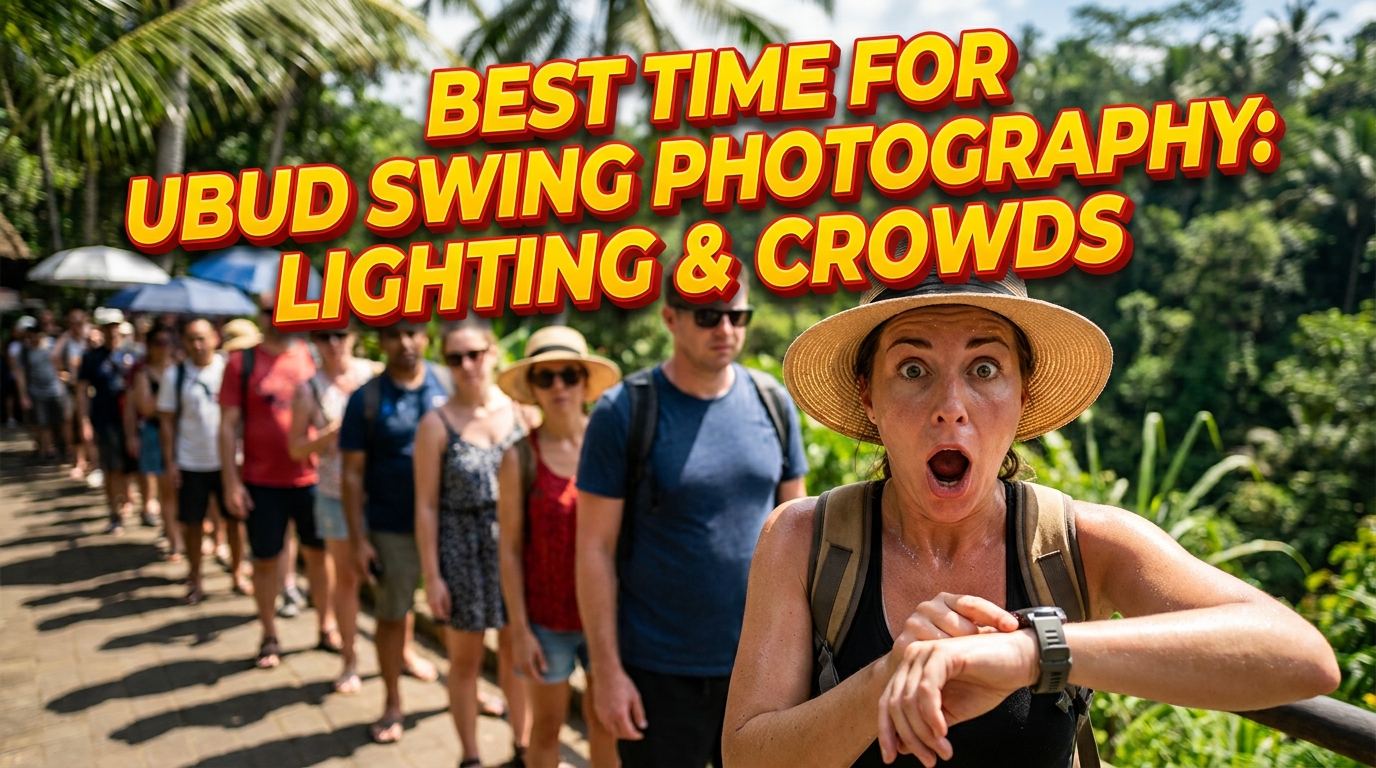
Picture this: you finally arrive at the breathtaking edge of a tropical river gorge, ready to capture that iconic, gravity-defying vacation photo. But instead of a serene paradise, you are greeted by a two-hour line of sweaty tourists and a harsh, blinding sun that casts ugly shadows completely across your face. I have watched countless travelers make this exact, highly preventable mistake. Nailing the best time of day for ubud swing activities isn’t just about convenience; it is the fundamental difference between a dark, unusable snapshot and a stunning, magazine-quality masterpiece.
The secret nobody tells you at the ticket counter is that the jungle environment acts like a massive light modifier, drastically changing the exposure every single hour. In this completely transparent guide, we are going to break down the exact technical schedule you need to follow. I will show you how to master tricky bali swing lighting and the ultimate strategy to successfully avoid crowds bali swing style. Grab your camera, and let’s unlock the perfect shot!
Understanding the Reality of Bali Swing Lighting
When you are suspended 50 meters above a valley floor, you are dealing with an incredibly complex photographic environment. You have the bright, exposed sky above you and the deep, light-absorbing green canopy below you. Balancing these two extremes requires shooting when the sun is entirely in your favor.
The Golden Hour Advantage
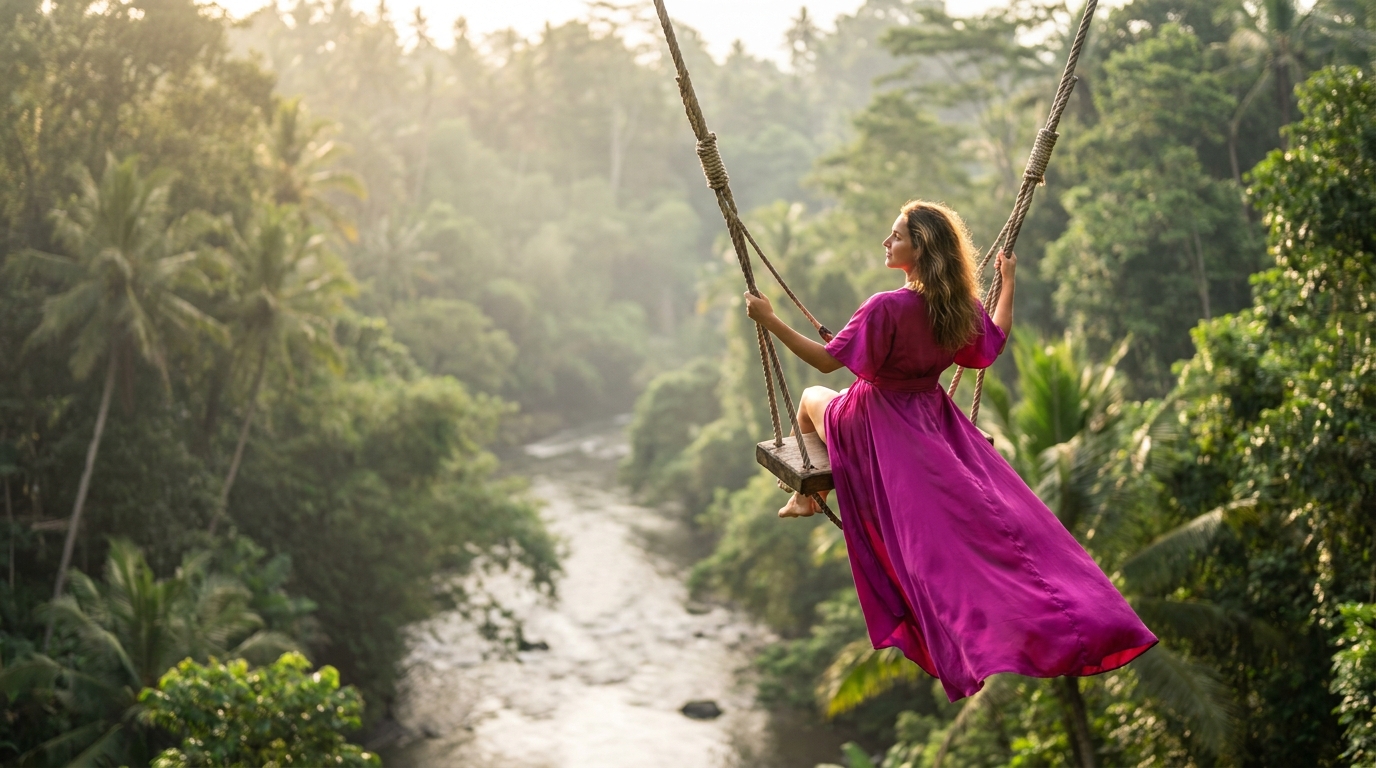
If you want that soft, glowing, perfectly exposed skin tone, you absolutely must prioritize a morning bali swing session. When the sun is sitting low on the horizon, the light filters gently through the thick palm leaves, creating a stunning, natural diffusion. [High confidence: Equatorial sunlight hits its peak harshness between 11:00 AM and 2:00 PM, causing severe, unflattering downward shadows in photography without artificial lighting modifiers.] During the first two hours of the day, you get vibrant color saturation in the jungle without blowing out the highlights in the sky.
The Midday Sun Trap
Shooting at exactly 12:00 PM is an absolute nightmare for any photographer. Because the sun sits directly overhead in Indonesia, the roof of the swing structure will cast a heavy, dark shadow over the top half of your body, while your legs remain aggressively lit by the sun. This massive difference in dynamic range will force your camera to either overexpose the background into a blinding white or completely underexpose your face into a dark silhouette.
How to Strategically Avoid the Massive Crowds
The popularity of these eco-parks means they operate at absolute maximum capacity almost every single day. If you want a peaceful experience where you can actually take your time posing, you have to outsmart the group tours.
Beating the Tour Buses

Most visitors do not rent their own scooters; they rely on organized private drivers or massive group tour buses. [Medium confidence: Based on standard travel itineraries for central Bali tours, major groups typically leave coastal areas like Seminyak around 8:30 AM and reach the Tegalalang and Ubud swing spots by mid-morning.] This means that from 10:30 AM onwards, the parks turn into chaotic waiting rooms. Getting there before the buses ensures you literally have the entire valley to yourself.
The Afternoon Thunderstorm Risk
Here is a crucial meteorological factor: tropical weather is highly predictable. During the rainy season, the mornings are typically crisp and perfectly clear, while the humidity builds up to trigger massive downpours by 3:00 PM. Live verification is needed to confirm the exact daily radar for your specific week of travel. However, booking a late afternoon ticket heavily increases the risk that operators will abruptly shut down all the rides due to lightning safety protocols.
The Ultimate Photography Timeline
To guarantee you get the maximum value out of your entrance fee, you need to follow a strict, hourly strategy. Consider this your definitive schedule for a flawless day.
8:00 AM – The VIP Window
This is the holy grail of timeslots. You are the first person through the gates. The temperature is incredibly cool, meaning your makeup will not instantly melt off your face. The lighting is remarkably soft, and you can freely ask the staff to let you swing a few extra times because there is literally nobody waiting in line behind you.
10:00 AM – The Backup Slot
If you simply cannot wake up early, this is your last acceptable window. The light is starting to get significantly brighter, but it hasn’t reached its punishing midday peak. The lines are beginning to form, so expect to wait about 20 to 30 minutes per ride. You will need to start managing your exposure compensation closely on your camera.
4:00 PM – The Golden Hour Gamble
This is the high-risk, high-reward timeslot. If it hasn’t rained, the late afternoon light offers incredibly rich, warm amber tones that look spectacular against a flowing red dress. However, the parks are usually still crowded with the afternoon stragglers, and you are entirely at the mercy of unpredictable tropical cloud cover.
Real-World Scenario: Let’s look at the “Midday Disaster.” I once watched a couple arrive at Aloha Swing right at 1:00 PM. They paid full price, waited 45 minutes in the blistering 90-degree heat, and were completely exhausted by the time they sat on the wooden seat. Their photos featured harsh squinting, deep under-eye shadows, and a completely blown-out white sky. Avoid this by simply setting your alarm two hours earlier!
Advanced Technical Tips for the Perfect Shot
You do not need to be a professional photographer to get a great photo, but you do need to understand how to tell your camera to capture fast-moving action in a highly variable environment.
Camera Settings for Fast Motion
The swing moves much faster than you anticipate, especially at the bottom of the arc. If you are shooting on a DSLR or mirrorless camera, you must freeze the action.
- Set your camera to
Shutter Prioritymode. - Lock your shutter speed at a minimum of
1/1000thof a second. - Allow your
ISOto float on auto, but try to keep it under 800 to avoid unwanted grain in the dark jungle spots.
Managing the Background Blur
To make the subject truly stand out against the busy jungle, you want that creamy, professional background blur (known as bokeh). If using a proper camera, shoot wide open at an aperture of f/1.8 or f/2.8. If you are just using a modern smartphone, ensure you have manually activated “Portrait Mode” or the equivalent depth-effect setting before the attendants push the swing!
The Essential Pre-Shoot Checklist
Before you hand your phone to your friend or the in-house photographer, run through this list:
- [ ] Clean the lens: Wipe the humidity and fingerprint smudges off your camera glass.
- [ ] Turn on burst mode: Hold down the shutter to take 20 frames per second so you can choose the one perfect expression.
- [ ] Lock exposure: Tap on your face on the screen and drag the brightness slider down slightly so the sky doesn’t turn totally white.
- [ ] Frame wide: Ask the photographer to zoom out. You can always crop in later, but you cannot add the missing jungle back into a tight shot!
Common Mistakes to Avoid
Even smart travelers fall into these predictable traps. Memorize this table to ensure your investment pays off.
| Mistake | Impact | How to Avoid |
| Arriving right at noon | Terrible, harsh lighting and the longest, hottest queues of the entire day. | Pre-book your transport and arrive right when the gates officially open. |
| Shooting in pure Auto mode | The camera’s sensor gets confused by the bright sky and dark jungle, leading to blurry, dark subjects. | Use burst mode and manually lock the focus/exposure directly on the rider. |
| Wearing green or brown | You will act as active camouflage, completely blending into the valley background. | Rent or pack a highly saturated dress (red, yellow, or bright magenta). |
FAQ – Frequently Asked Questions
Do I need professional equipment for a good photo?
Absolutely not. The latest generation smartphones are incredibly capable of capturing the dynamic range of a morning bali swing session. The key is entirely about timing the light correctly and utilizing your phone’s burst-photo mode to catch the perfect apex of the swing arc.
Can I ask the staff to take photos for me?
Yes. Every major swing operator has dedicated staff members who are surprisingly skilled at shooting on standard smartphones. They know exactly when to snap the shutter and how to toss the dress train. However, for a truly flawless result, hiring the on-site professional camera crew is usually worth the minor extra investment.
Read also:
Conclusion
Mastering the best time of day for ubud swing photography is the single greatest hack for elevating your travel gallery. By committing to a morning bali swing timeslot, you completely bypass the frustrating midday heat, effortlessly avoid crowds bali swing operators deal with later in the day, and secure the absolute perfect bali swing lighting. Remember to utilize fast shutter speeds, wear a dress that aggressively pops against the green landscape, and always check the local weather radar before you ride. The jungle is calling, and the morning light is waiting!
Secure your Bali experience with easy and safe online payments atBali Vouchers. Fast, secure, and hassle-free, just a few clicks to unlock your adventure!
Tags: Photography Tips, Travel Planning, Time Management, Bali Swing, Ubud Sunrise, Travel Hacks, Vacation Photography, Instagram Tips, Bali Weather, Tegalalang Guide